Drag the floor or use ← → to visit other rooms
Teachers and students choose how each concept is learned. The key concept list keeps everyone heading for the same destination.
- Sheet
- 07 of 12
- Trait
- Creativity
- Theme
- Room for possibility
One concept, many ways in.
The playbook is now infinite
The old playbook had only a few plays: introduce the chapter, read the chapter, homework, chapter test. Students lined up like cars on a track with no options, and nobody knew where they were on the field.
Now the students see the goal posts in the first week: the year’s key concepts and skills. The teacher doesn’t have to teach every concept; the teacher has to make sure every student learns them. Given the choice of how, students are remarkably creative. Football has between 5,000 and 20,000 plays. Students can probably create more.
When the final whistle sounds, you don’t say, “I taught it.” You say, “We learned it. All of us.”
 Dr. Lee Jenkins“Learning That Lasts: From Tracks to Turf”, learningthatlasts.com, 2026. The tagline came from Amy Hardy, Principal of Mountainside Middle School, Scottsdale, Arizona.
Tracks: every student, the same four plays
Turf: the goal posts in view, a path of their own
Students decide the order, and the how
Lead students into true partnership in deciding the order in which concepts will be learned and how they will be learned. Draw on every resource: the teacher’s guide, your own experience, colleagues, artificial intelligence, and the genius of the students themselves.
Teachers have fun with “random”
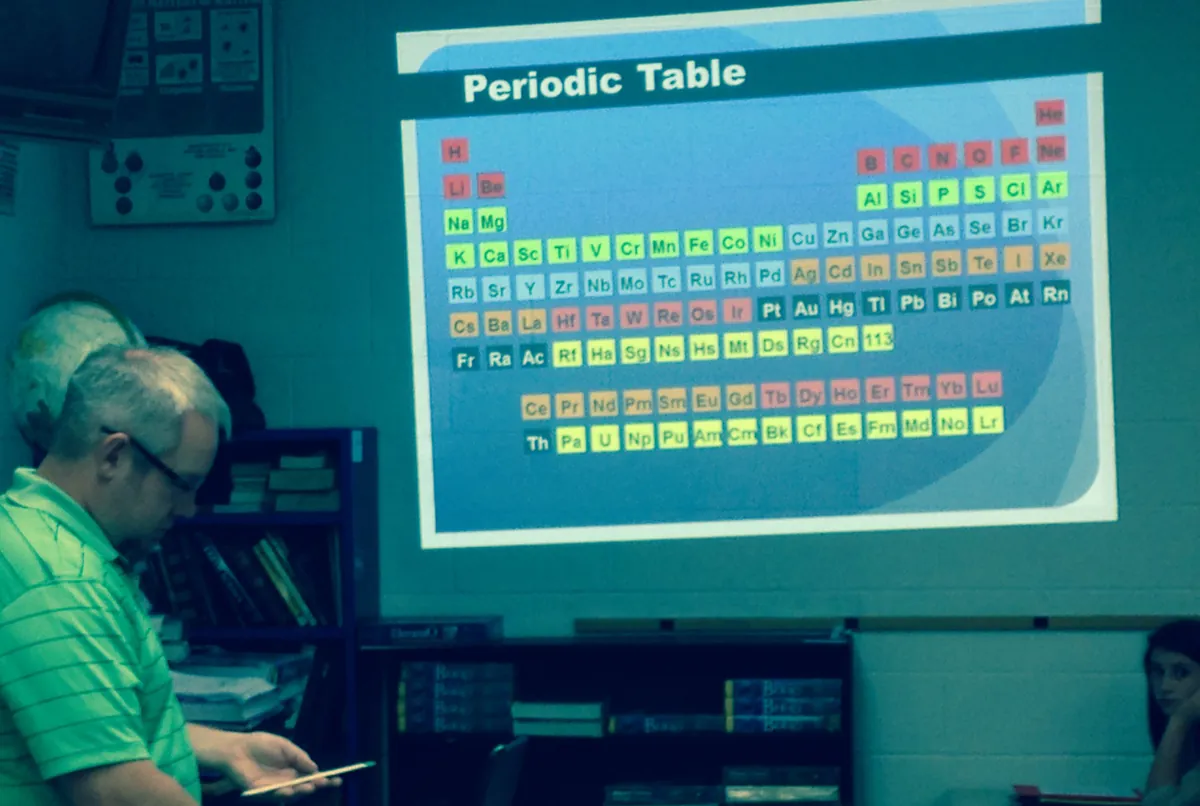
A hyperlinked periodic table
A Saskatchewan biology teacher wrote each element on a tongue depressor. A student draws one, clicks it on the smart board, and up comes a question on one of the year’s key concepts.
A skull full of lima beans
In Delaware, numbered, spray-painted lima beans are drawn from a Halloween skull to choose the week’s quiz items.
The hamster ball
Numbered slips go into a hamster ball and roll out at random, then go back in, because any concept can come up on any quiz.
From the keynote
Students choosing what to learn and how, in Dr. Jenkins’ own words.
Fourteen five-minute classroom visits, from pre-kindergarten to grade 12, that build adult intelligence about learning. Kids can do remarkable things if they’re given remarkable things to do. And if they aren’t? When the class has a say in what comes next. Adolescent intelligence: how students want to learn, and how a class turns into learning scientists. Students test their own hypotheses about what will move the class graph.
What the time is for
“Because students are learning content faster through the preview questions teachers have extra time in the classroom. For example, the health teacher used the time for developing expertise with CPR.”
The whole field, on three graphs
With all that creativity, the class needs to see the whole field: 25 yards by the end of the first quarter, 50 by half time, 75 by the third quarter, and everyone across the goal line together at the end of the year. Every student graphs their own journey, the class keeps a team total, and the principal coach keeps the school’s total. Just as coaches and athletes celebrate together in athletics, with Learning That Lasts the teachers, principals and students celebrate together.
- 25
- 50
- 75
- Goal
Every student
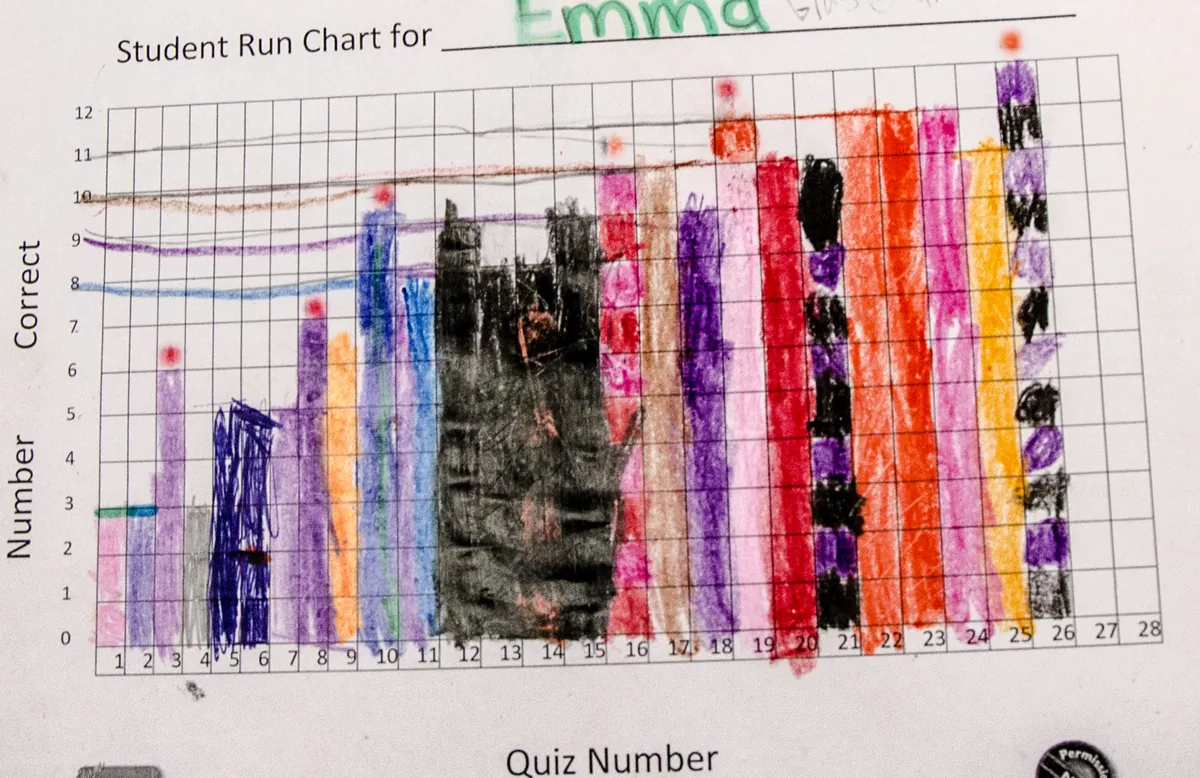
An elementary student’s own graph.
The class
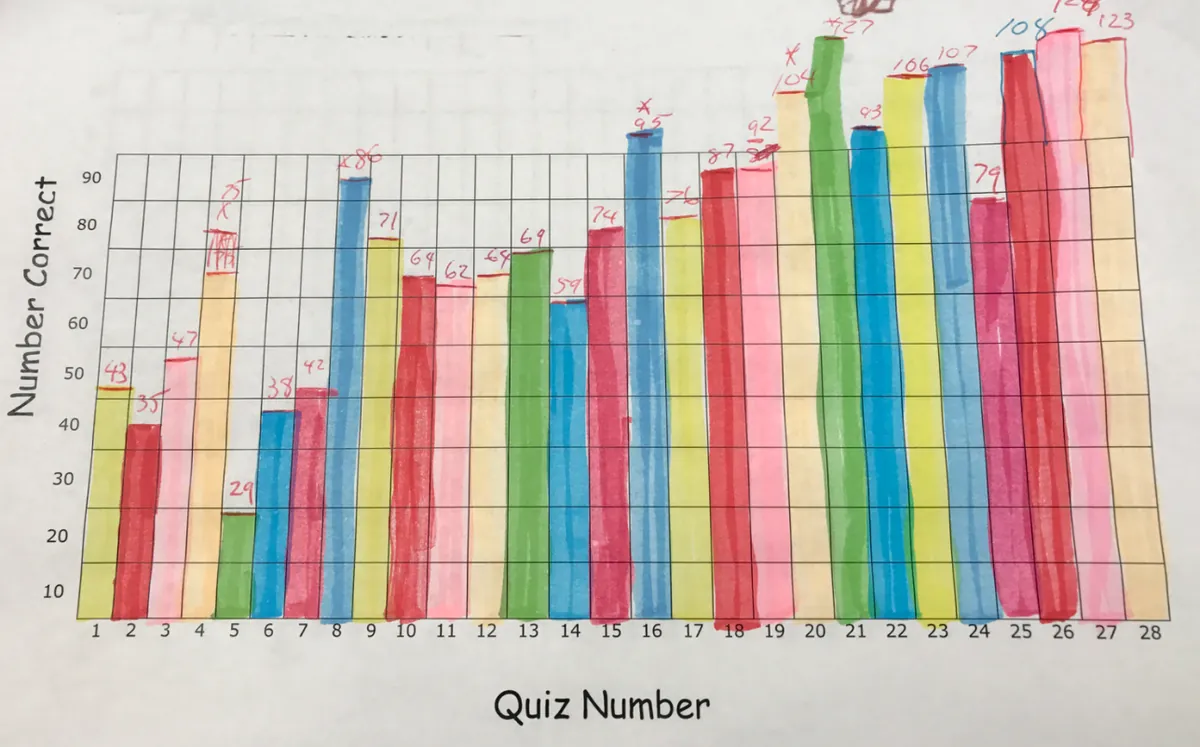
A class run chart. The stars mark new All-Time Bests.
The school
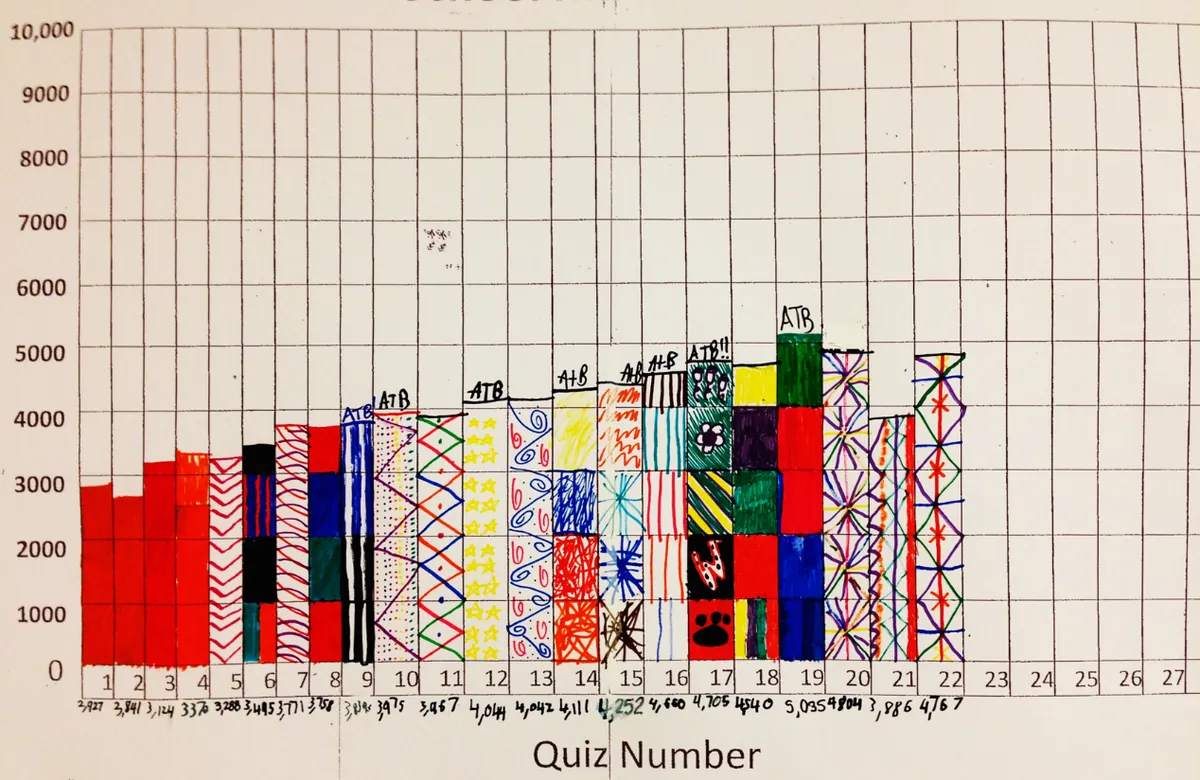
The school graph: the principal coach, all the quarterbacks and all the players.
Give your teachers the time to design, all year long.
With LtoJ [prior name for Learning That Lasts] we keep pushing forward even the last day of the school year.