Drag the floor or use ← → to visit other rooms

Dr. Lee Jenkins
Teacher, superintendent, author and speaker. Scottsdale, Arizona.
Dr. Lee Jenkins: teacher, principal, superintendent, author, and the educator behind Learning That Lasts.
He has written 50 books and spoken in most U.S. states, Canada and ten other countries.
For exceptional learning for all K–12 students, he offers a simple design structure that changes everything from teach/inspect to learn/celebrate: year-long journeys that keep the kindergarten level of learning joy.
Still teaching
Decades after his first classroom, Dr. Jenkins still works alongside teachers and students in their classrooms.
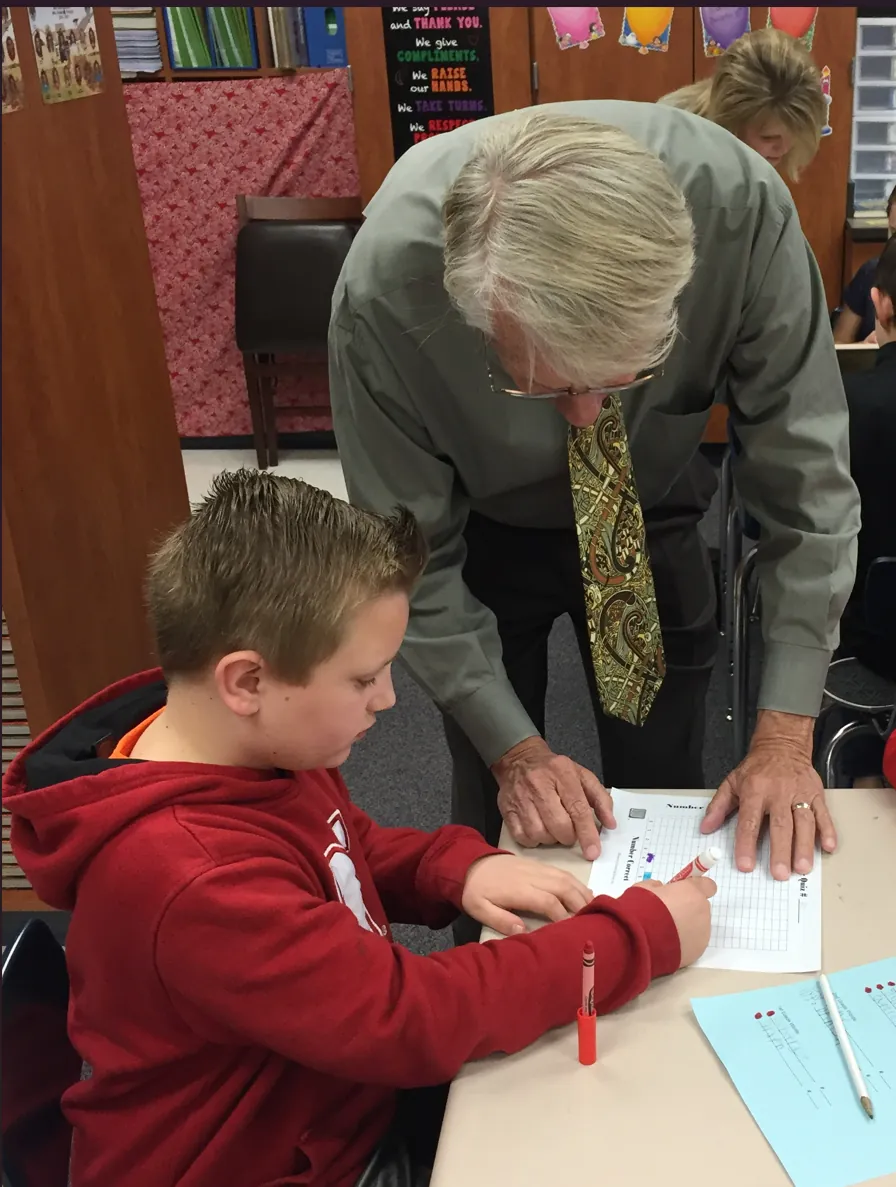
A student explaining to Dr. Jenkins how the graphs work. 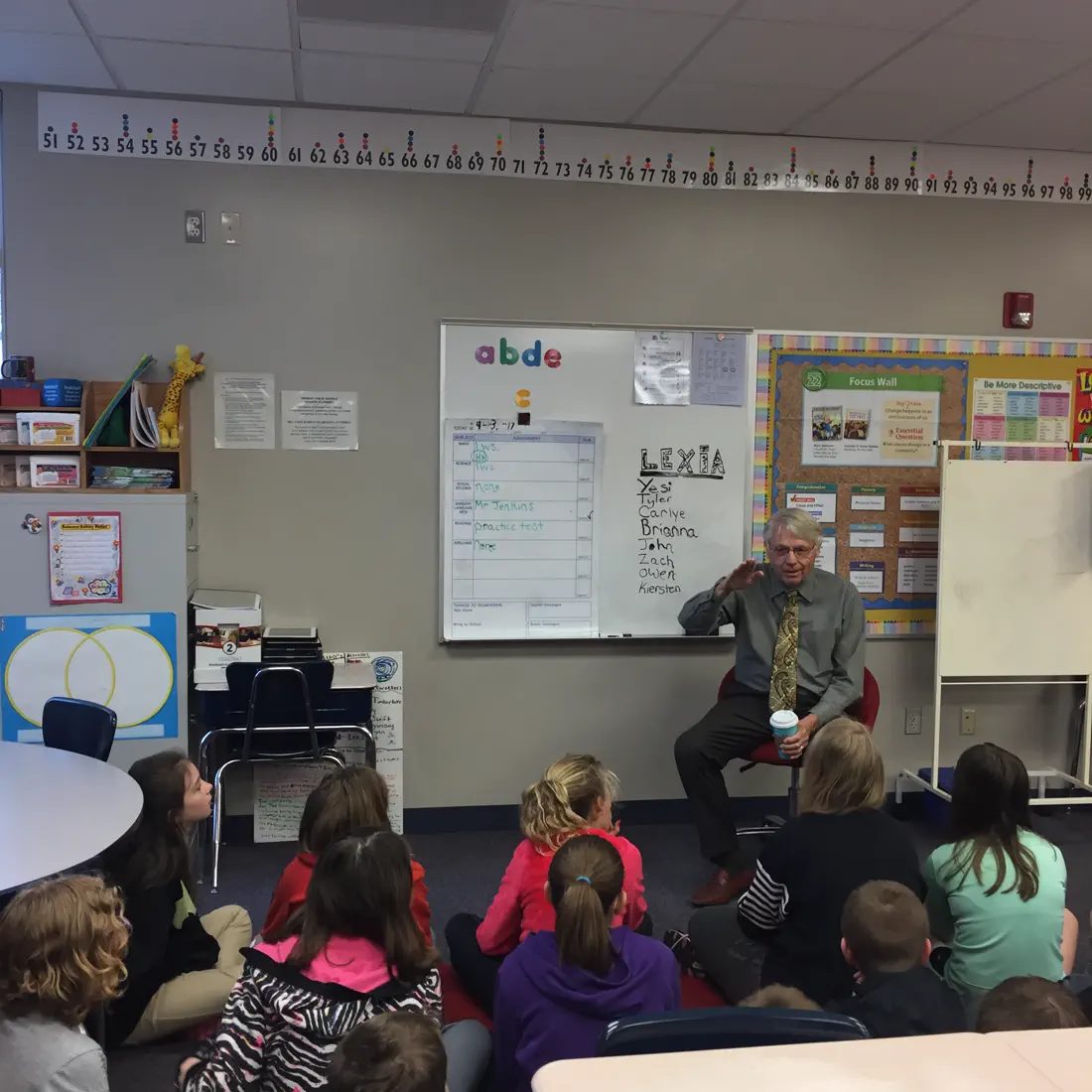
A class gathers on the carpet to hear Dr. Jenkins. 
Place value with a primary class: 297, three ways. 
Working through a list with two students at their table.
One invitation, a lifetime of work.
10 stops, from the invitation that changed his teaching to the new book. Choose one, or scroll along the wall.
- 01 · The first invitation
“I think you’d enjoy my classroom.”
At a faculty breakfast after his third year of teaching, Evelyn Neufeld invited him to visit her room. For the first time he saw every student in hands-on learning, first graders solving problems that challenged his fifth graders. For two years he spent his recesses and part of every lunch there.
- 02 · More invitations
Science, math, reading and writing
Within two years he was on the summer faculty of San Jose State University’s demonstration school. Peggy McLean invited him into ESS science, Mary Laycock to write math books, Marion Nordberg into reading and writing. At Claremont Graduate University he studied under Peter Drucker, and a lunch invitation from Bill Martin Jr. began thirty years of friendship.
- 03 · A hard lesson
The right practices, the wrong test
As a principal he put what he’d learned into practice. He knew chapter-by-chapter teaching left most students apathetic, but didn’t yet know what assessment to use instead of chapter tests, and the school’s scores were terrible. Without that failure, he says, he wouldn’t have been all ears when he heard Deming.
- 04 · The one-minute invite
“Lee, I think you’ll enjoy this next session.”
In a hallway at an American Association of School Administrators conference, Lew Rhodes steered him into a session by David Langford’s superintendent. It was his introduction to W. Edwards Deming, and he read everything of Deming’s he could find.
1990 - 05 · Deming, in person
Ten questions a week
At a Deming conference for educators in January, Dr. Deming described how a classroom could be a learning system: tell students what they’ll learn, and if there are 100 concepts, quiz ten at random each week.
1992 - 06 · A letter
“Thank you for the 100-sided die.”
By November teachers in his district were already doing it, and he wrote to Dr. Deming. The reply thanked him for his letter, for the 100-sided die and for the charts: “I wish for you all good things.”
1992 - 07 · A warning
The Jenkins Curve
He asked 3,000 teachers in five states two questions: what grade do you teach, and what percentage of your students love school? John Hattie, who met him when both were invited to speak at the same conference, named the result The Jenkins Curve.
 08 · A process
LtoJ®
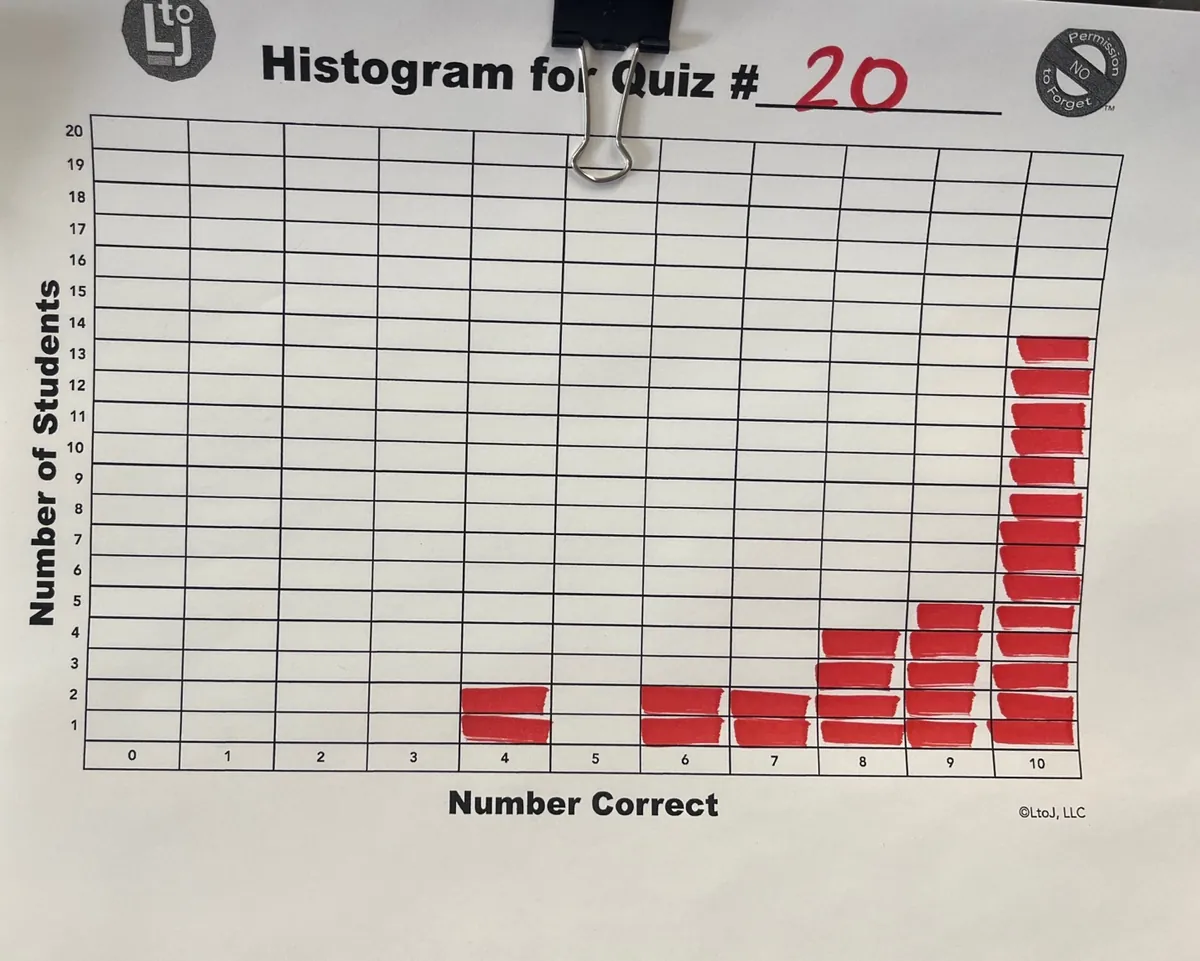
He named the process for the shape of a class histogram over a year: an “L” at the start, a bell in the middle, a “J” at the end. It has since run in thousands of classrooms.
2003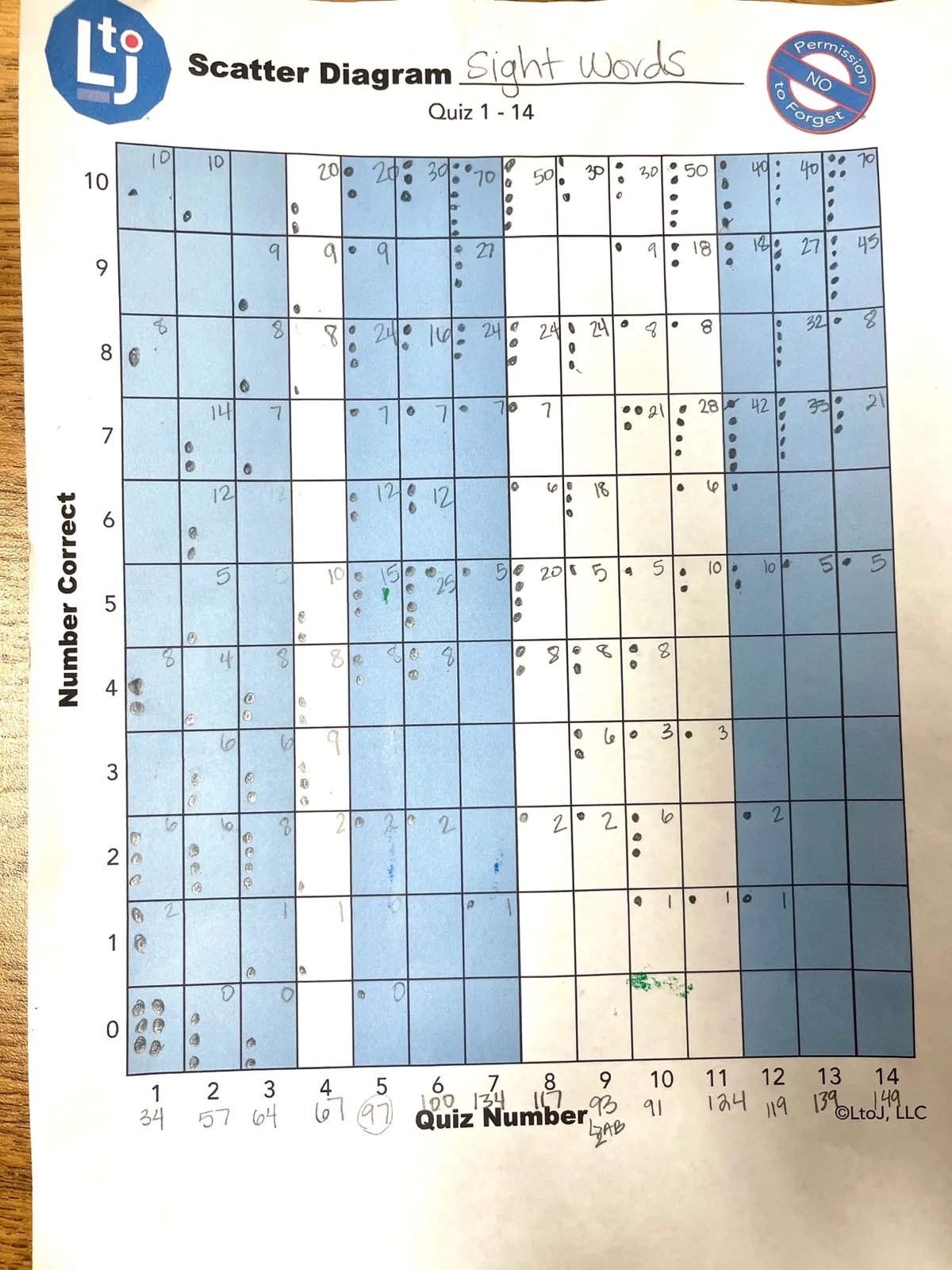 09 · Effect size
Nearly six times the average
He gathered data from about 300 K–12 classrooms in five states and used the effect size John Hattie taught. The result: 5.9 times the average of 250 influences on learning. When educators measure real learning instead of cram-and-forget, creativity and exciting learning open up.
 10 · Learning That Lasts™
Speaker, author, curator
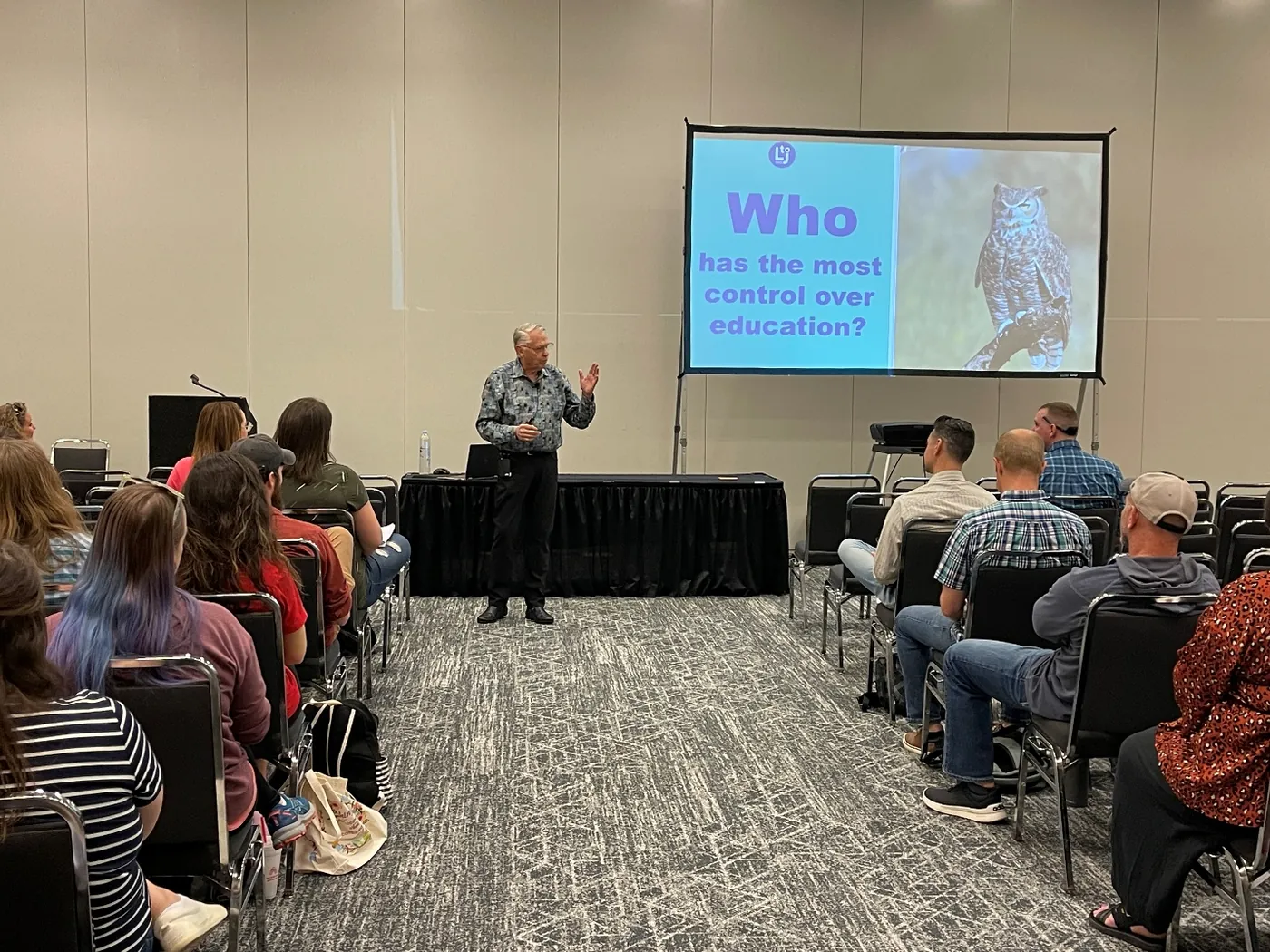
From Scottsdale, Arizona, he has spoken in most U.S. states, Canada and ten other countries, and written 50 books. The next is Learning That Lasts: The Structure for Actual Intelligence.
Today
Better learning, not just better teaching
Over his career, Dr. Jenkins lived through many attempts to improve teaching: better lesson plans, a seven-step teaching sequence, forty-five or more attributes of good teaching for teacher evaluations. All of them focused on teaching.
His focus is learning. He likes to ask, “Of the hundred or so teachers you had from kindergarten to grade twelve, how many mesmerised you with their great teaching?” The answer is usually two or three. His conviction: almost every teacher can build a superior learning system.
Dan Heath’s Reset helped him name it. When there’s a problem to solve, look for the constraint, the thing keeping progress from happening. In education, the constraint is the chapter-by-chapter method. The museum’s rooms follow educators as they replace it with visible competency, raucous celebrations of learning, student creativity beyond anything expected, and schools where good character can be seen.
The website you are in now is designed as an invitation. That’s why there is no sequence: only multiple invitations for you to accept.
 Dr. Lee Jenkins“The Story”, written for the museum, 2026
The failure that made the method
A principal with a plan
As a principal he put into practice what the teachers who invited him in had taught him. He knew the chapter-by-chapter method left most students apathetic.
Terrible test scores
But he didn’t know what assessment to use in place of the chapter tests. The school’s test scores were terrible.
All ears for Deming
Without that failure, he would not have been all ears six years later, when Dr. Deming described how to truly measure learning. He taught it full-time for years.
Almost six times the learning
Data from about 300 K–12 classrooms in five states, measured with John Hattie’s effect size: 5.9 times the average of 250 influences on learning.

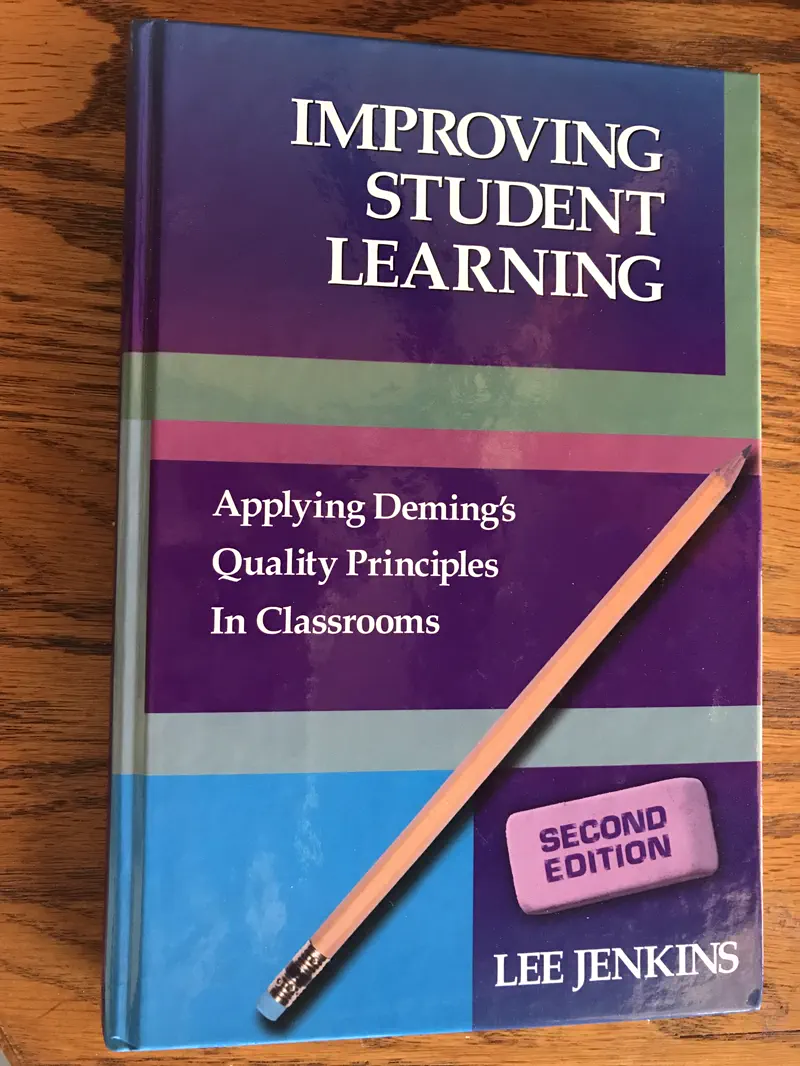
Learning That Lasts: The Structure for Actual Intelligence
Coming soon, the whole framework in one book: four traits, named at the foot of the tower on its cover, and the structure that holds them up.
The title came from Nancy Lauterbach, who once owned the largest speakers bureau in the United States.
Lee Jenkins has been my boss, mentor, colleague and friend for nearly 30 years. No other person has influenced my career more.
 Jeff Burgard, Grade 8 science teacher, Issaquah, Washington
Across a whole career
Over 40 years in the classroom
“Lee Jenkins’ process has made the single most difference in my teaching in over 40 years in the classroom.”
Theresa CorcoranGrade 5 teacher, Graber Elementary School, Hutchinson, Kansas
Nearly 30 years beside him
“He took the complex ideas, simplified them into a language that educators could understand and infused them with his unique style of caring that resulted in classroom practices that effectively improve learning and enthusiasm.”
Jeff BurgardGrade 8 science teacher, Issaquah School District, WashingtonA principal, at his 2023 keynote
“I really enjoyed Lee Jenkins’ keynote for the Arizona School Administrators conference in 2023. Dr. Jenkins’ strategies allow for teachers to use the power of data to help motivate and celebrate alongside their students.”
Aaron BagwellPrincipal, Lake Pleasant School, Peoria, Arizona
A first-year teacher
“Coming out of college as a first-year teacher you have no idea where to start. Lee Jenkins provides the road map all teachers, K-12, need to organize, teach and be successful.”
 Codi HroudaGrade 5 teacher, South Sioux City, Nebraska
Bring the educator behind Learning That Lasts to your district.
Zero pushback from any staff members.