Drag the floor or use ← → to visit other rooms
Creativity is no longer what happens after the “real work.”
Students choose what to learn next, how to learn it and how to show it, and the learning goes deeper for it.
Creativity isn’t extra. It’s how the learning happens.
13 pieces on the wall
- Write
An ABC book of Australia
Age 7, home school
Reading and writing
Dr. Jenkins’ articles
- Write
My Book of Homophones
Age 7, home school
Homophones, every pair his own choice
Dr. Jenkins’ articles
- Write
Words for my own wordless book
Kindergarten and grade 1
Sight words and early writing
Early childhood workshop
- Write
A book written to a song
Early elementary
Early reading
Early childhood workshop
- Solve
Fifty books on the Civil War
Middle school
Finished the year’s concepts early, then became an expert
“From Tracks to Turf”, 2026
- Solve
Hypotheses to beat a slump
Elementary class
Reading the class run chart. Their plan worked
Dr. Jenkins’ classroom visits
- Solve
28% of the year, 40% of the learning
Elementary class
Percentages: the class proved it was speeding
Dr. Jenkins’ classroom visits
- Solve
Our own effect size
High school, every period
Mean and standard deviation
Evidence Hall
- Design
Ten ways to celebrate, on a spinner
Elementary class
Class All-Time Bests
Deming Institute podcast
- Design
The All-Time Best distribution center
Elementary class
Students run the class celebrations
Dr. Jenkins’ classroom visits
- Design
A charity of their choosing
Grade 5, Hutchinson, Kansas
Every best adds to the charity jar
Theresa Corcoran
- Perform
Scales at 120 beats a minute
High school orchestra, Rialto, California
Six major and five minor scales
Susan Barnes
- Perform
CPR, to the level of expertise
Junior high health, Metropolis, Illinois
Time won back by weekly preview
Laura Hayes
Every piece comes from a real classroom: from Dr. Jenkins’ articles, talks and classroom visits, and from teachers’ own letters.
WRM
- Wonder
- is the spark.
- Resilience
- is the fuel.
- Mastery
- is the heat and light.
Watch a toddler learn: wonder first, then the resilience to keep at it, and finally mastery. Education’s Trifecta keeps that order. Without wonder, students think, “Who cares?” and schools reach for bribes to get the work done.
Wonder comes from curiosity, surprise, anticipation and memories, from students, families, colleagues, the library, and artificial intelligence. Resilience comes from choice, creativity, community, adults who listen, and hands-on learning.
Without the spark, there is no fire. Without fuel, the fire dies. Without light or heat, what’s the purpose?
 Dr. Lee JenkinsThe Learning Trifecta workshop, 2025
Where the time for creative work comes from
Students remember what they learned, so the class doesn’t spend weeks learning it again. The time that frees is where creative work happens.
A traditional year
Theresa Corcoran’s grade 5 year
I spend about 1/3 less time on surface learning compared to traditional classrooms AND the kids remember the surface learning so much better. What do we do with the left over time? We spend it applying the remembered surface learning with deep and transfer learning activities.
Theresa Corcoran Grade 5 teacher, Graber Elementary School, Hutchinson, Kansas
Students choose what, how, and how to show it
This gallery is made of teachers’ stories. In every one, students already hold the key concept list or dichotomous rubrics for the whole year or semester: not a unit, the complete course.
Through the year, students help decide:
- Whatwhat they learn next, from the key concept list or the dichotomous rubrics
- Howhow they will learn it
- Show ithow they will show they learned it
They may even add key concepts or skills to the course documents the teacher provided.
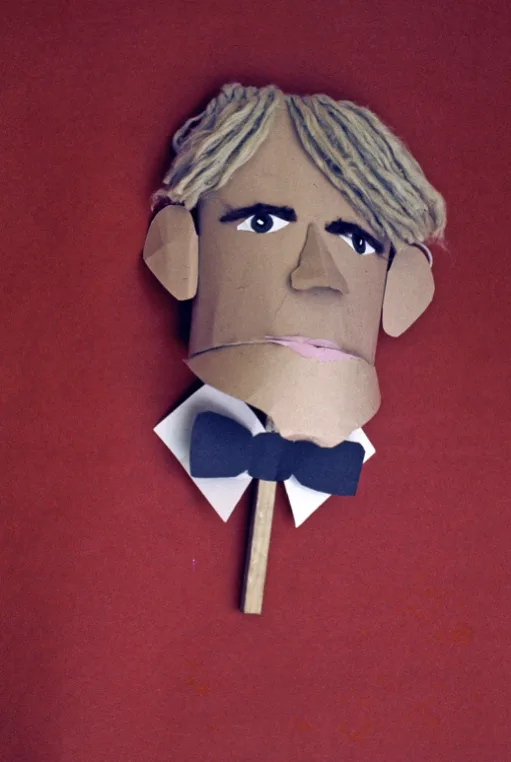
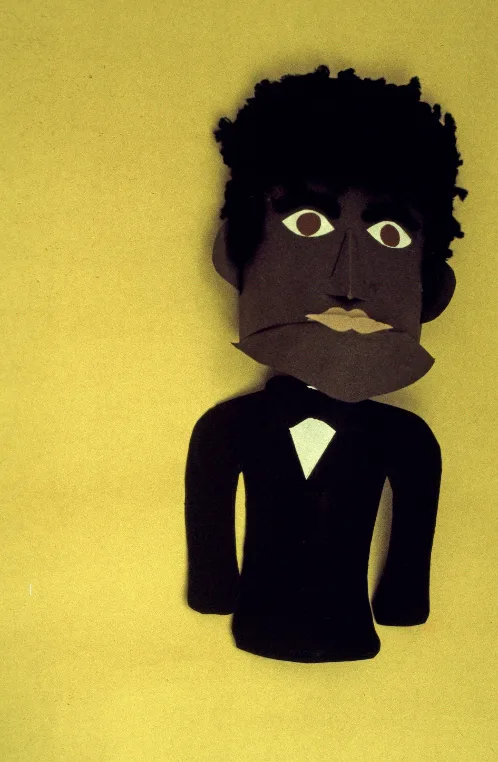
One set of directions, and every puppet different
Students in grades 4 to 8 have made puppets from these directions. Each student chose an important historical person or a renowned author. The puppet went with a written report, and beside it hung a “Who Am I?” riddle: clues about the person, from hard to easy.
When students write reports, usually only the teacher reads them. While the puppets are being built, students learn history and literature from each other.
Years later, when students reminisce about school, they almost always mention their puppet, and say they still have it.
The pencil that changed hands
Student creativity begins when adults listen to student ideas, and applaud them.
A teacher noticed a young child holding his pencil between his index and middle fingers. It was certainly not the way she had been taught to hold a pencil. She walked over to show him the “correct” way. Then she paused.
“Why do you hold your pencil that way?” she asked. “I used to hold it the other way,” he said, “but then I tried this way. It works much better because my pencil doesn’t wobble.”
The teacher could have corrected him. Instead, she became curious. “Maybe you are right,” she said. “I’m going to hold my pencil your way for two weeks and find out.” Two weeks later she came back with her report: “You were right. The pencil doesn’t wobble.”
That was ten years ago. The teacher still holds her pencil the way that young student taught her. She didn’t surrender her authority; she showed its finest use. She listened, tested the idea, followed the evidence, and changed. And the child learned that his observations mattered, his ideas deserved testing, and even adults could learn from him.
- Competency
- The teacher tested which method actually worked.
- Creativity
- The child discovered an unconventional solution.
- Character
- The teacher showed humility, respect and trustworthiness.
- Celebration
- She came back and openly credited the student.
Learning That Lasts begins when teachers stop asking only, “How can I teach this child?” and also ask, “What might this child teach me?”
Dr. Lee Jenkins“The Pencil That Changed Hands”, 2026Required concepts, original work
Once learning is measured by key concepts and rubrics, students can show mastery in many ways.
The concept is fixed;
the product is theirs.
50books on the Civil War
Students who prove they already know the year’s key concepts aren’t held back. They start on next year’s, or become experts in something they love, like the student who read fifty books on the Civil War and met with a university professor to talk about them.
Kids do remarkable work when given remarkable work to do.
Make room for creativity without gambling on results.
Lee’s process has the same level of engagement as many of the games that kids play.